Quick answer
Water damage restoration is the full process of stopping the source, extracting water, drying the structure with professional equipment and repairing what was damaged. ValleyCore does it 24/7 across Hidalgo and Cameron counties, with daily moisture readings and documentation for your insurer.
What water damage looks like
Match what you see at home to the signs below.
See all signs of water damage →Brown rings on the ceiling
Call todayBrown rings or spreading stains can mean water is leaking above the ceiling. Even a dry stain needs its source checked.
Bubbling or peeling wall paint
Call todayPaint bubbles or peels when moisture collects behind it. The wall may be wet inside even if the surface feels dry.
Warped or cupping floors
Call todayFloorboards curl at the edges or laminate rises after absorbing water. Moisture may still be trapped underneath.
Swollen, separating baseboards
Call todayBaseboards swell, split or pull away from the wall when they absorb water. The bottom of the wall may need drying too.
What water damage restoration actually means
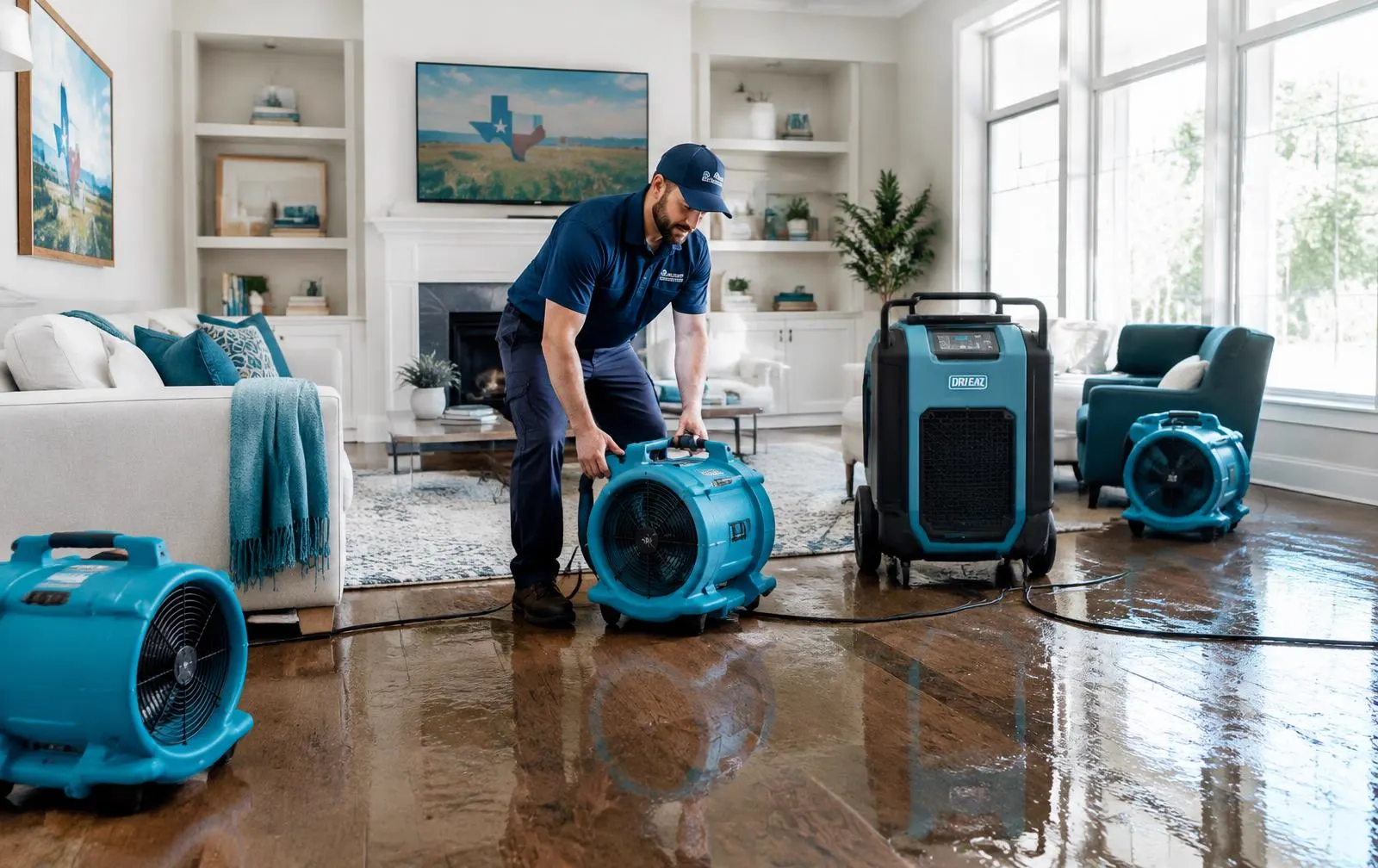
Water damage restoration is more than mopping up a puddle. It is a complete process that starts with stopping the source and ends when your floors, walls and cabinets are verified dry and put back the way they were. In between, a trained crew inspects the property, measures how far the moisture has traveled, extracts standing water, removes materials that cannot be saved, dries the structure with professional equipment and records readings every single day until the job hits its drying goals.
Most of the damage is invisible. Water wicks up drywall, soaks into baseboards, runs under laminate and tile, and settles into the bottom plates of your walls. A wall can look and feel dry to the touch while the inside is still saturated. That hidden moisture is what leads to swelling, odors, delamination and mold growth days or weeks later. That is why we never guess — we measure with moisture meters and thermal imaging and we write everything down.
Why the Rio Grande Valley is different
Homes in Hidalgo and Cameron counties face a specific mix of risks. Our flat terrain and older drainage systems mean that heavy rain can turn streets into rivers in under an hour — the March 2025 storms flooded neighborhoods in Harlingen, McAllen and across the Valley, and many families still remember Hurricane Hanna in 2020. Hurricane season runs June through November, and tropical systems can drop more rain in one day than we see in months.
Even without a storm, the Valley is hard on plumbing. Our expansive clay soils swell when wet and shrink during drought, which shifts slab foundations and stresses the copper and PVC lines running beneath them. Slab leaks are common here. And because air conditioners run most of the year, clogged condensate lines and failed drain pans are one of the most frequent causes of ceiling and wall water damage in the Valley. High humidity also means wet materials dry slowly on their own — which makes professional drying even more important.
Our water damage restoration process
Every job follows the same documented path so you always know where things stand. First, we inspect the property, find the source, check for electrical hazards, and map the moisture with meters and infrared cameras. We take photos and notes of everything — this is the documentation your insurance company will want to see.
Next we extract standing water with truck-mounted or portable extraction units, which removes far more water than any household vacuum or towel. Then we set up commercial air movers and dehumidifiers sized to the space and the amount of water involved. We come back to take moisture readings daily, adjust equipment, and log the results. When the structure reaches its dry standard, we remove the equipment and move into repairs: drywall, baseboards, paint, flooring and cabinets, so your home looks like home again.
- Free inspection and moisture mapping
- Emergency water extraction
- Structural drying with daily moisture readings and drying logs
- Removal of unsalvageable materials
- Repairs and rebuild — drywall, flooring, trim, paint
Working with your insurance company
Most sudden and accidental water damage — a burst pipe, a failed water heater, a washer hose that splits — is the kind of loss homeowners policies are written for, but every policy is different and only your insurer decides what is covered. What we do is make the process easier for you. We work with all insurance companies, we document everything your insurer needs — photos, moisture readings and daily drying logs — and in most cases we can bill your insurance directly so you are only responsible for your deductible and anything your policy does not cover.
We recommend calling your insurance company to open a claim as soon as you are safe. You do not need to wait for an adjuster before starting mitigation — in fact, most policies require you to take reasonable steps to prevent further damage. Our documentation shows exactly what was wet, what was removed and why.
Preventing mold after water damage
In our humid climate, mold can begin to grow on wet drywall and wood within 24 to 48 hours. Fast, professional drying is the best way to prevent mold. By removing water quickly and bringing materials back to their normal moisture levels, we take away the conditions mold needs. If mold is found during our inspection, we will tell you honestly and refer you to a TDLR-licensed mold professional, as Texas law requires.
Local, bilingual, available 24/7
We serve the whole Valley — from Mission and McAllen to Edinburg, Pharr, Weslaco, Harlingen and Brownsville. Our team speaks English and Spanish, so you can explain what happened in the language you are most comfortable with. Hablamos español. Call any time, day or night, weekends and holidays included. We will talk you through what to do right now and get a crew on the way.