
Quick answer
A slab leak is a broken water line under your foundation — common in the Valley because clay soils shift. Signs include warm floor spots and a high water bill. A licensed plumber repairs the line; we dry and restore the floors and walls.
What slab leak damage looks like
Match what you see at home to the signs below.
See all signs of water damage →A warm spot on the floor
Call todayA thermal camera may show unusual warmth where a hot-water pipe leaks under the slab. Heat alone is not proof; a licensed plumber confirms the source.
Cracked or lifting floor tiles
Get it inspected soonTiles that crack, loosen or lift can be a sign of moisture or foundation movement. Have the floor and plumbing checked rather than assuming the cause.
Damp carpet with no visible source
Call todayA damp patch away from fixtures may come from water moving under the floor. Hidden plumbing and other possible sources need inspection.
A meter moving with fixtures off
Call todayA moving leak indicator when taps and water-using appliances are off can signal a plumbing leak. It does not tell you where; a plumber can locate it.
Why slab leaks are so common in the Valley
Most homes in Hidalgo and Cameron counties are built on concrete slab foundations, with water lines running in or under the slab. Our region also sits on expansive clay soils. When it rains, the clay swells; during long dry stretches, it shrinks and cracks. That constant movement puts stress on the foundation and on the pipes beneath it, especially older copper lines that may also be dealing with corrosion from our hard water.
Over time, a pipe can develop a pinhole or crack. Because it is buried under concrete, the leak can run for weeks or months before anyone notices. By then, water may have spread under tile, laminate or wood flooring, wicked into the bottom of walls and soaked into cabinet bases.
Signs you may have a slab leak
Slab leaks are hidden, but they leave clues. A hot water line leaking under the slab often causes a warm spot on the floor — you may notice it with bare feet, or pets may like to lie in one particular spot. You might hear water running when every faucet is off. Your water bill may climb without any change in how you use water, or your water heater may seem to run constantly.
Other signs include damp or discolored flooring, cracking or loose tile, cupping hardwood or laminate, musty smells near the floor and baseboards that are swelling. Outside, you may see unexplained wet soil along the foundation.
- Warm or hot spots on the floor
- A water bill that jumps without explanation
- Sound of running water when nothing is on
- Damp carpet, lifting tile or cupping wood floors
- Musty smell near baseboards
- Water heater running more than usual
Who does what: plumber vs. restoration
A slab leak has two separate parts. The first is finding and fixing the leaking pipe. That is plumbing work and must be done by a licensed plumber, who may use electronic leak detection, pressure testing and either spot repair through the slab or a reroute through the walls or attic. If you don't already have one, we can refer you to a licensed plumber.
The second part is the water damage — and that is where we come in. Once the source is stopped, we map the moisture, remove flooring where necessary to allow the slab to dry, dry walls and cabinets, and restore what was damaged.
How we dry a slab leak
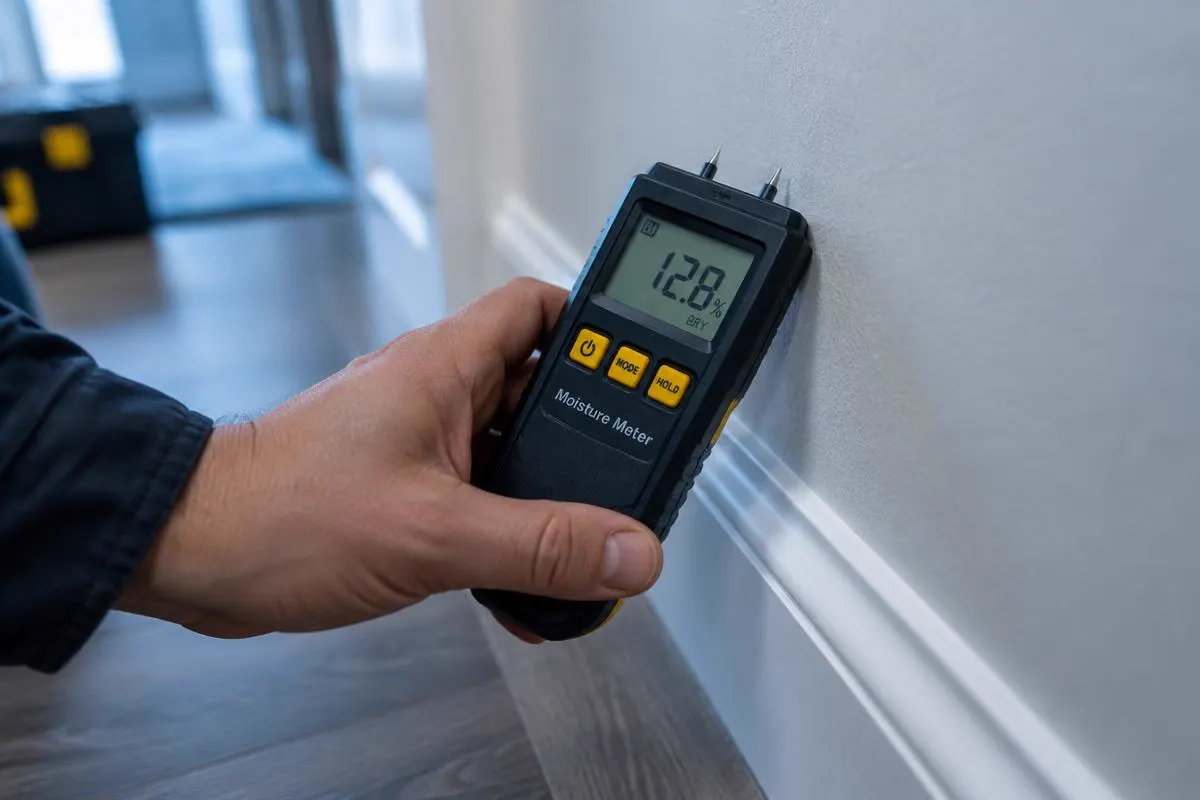
Concrete holds a lot of water and releases it slowly. Drying a slab and the materials on top of it takes more patience than a typical leak. We use moisture meters and thermal imaging to find the wet zone, which is often larger than expected. Floor coverings like carpet, pad, laminate and some vinyl plank usually need to be lifted so the concrete can dry. Tile may be left in place if it is well bonded and the moisture can be managed, but we'll explain the trade-offs.
We then set up air movers and dehumidifiers, sometimes with specialized drying mats or heat, and take readings daily until the slab and surrounding materials reach their dry standard. In our humid climate, this can take longer than other types of drying, so we keep you informed every day.
Insurance and slab leaks in Texas
Coverage for slab leaks varies widely in Texas. Many homeowners policies treat the cost of accessing and repairing the pipe differently from the resulting water damage, and some policies limit coverage for leaks that happened gradually. Only your insurer can tell you what your policy covers. What we can do is document everything your insurer needs — photos, moisture readings and daily drying logs — and bill your insurance directly when coverage applies. Read our guide: Does homeowners insurance cover slab leaks in Texas?
Don't wait on a slab leak
Because slab leaks are slow, it's tempting to put off dealing with them. But the longer water runs under your floor, the more it spreads, the more flooring may need to be removed, and the higher the risk of mold and foundation movement. Fast, professional drying is the best way to prevent mold. If mold is found, we refer you to a TDLR-licensed mold professional. If you suspect a slab leak, call us — we'll come out for a free inspection and refer you to a licensed plumber for the repair.