Harlingen and the March 2025 flooding
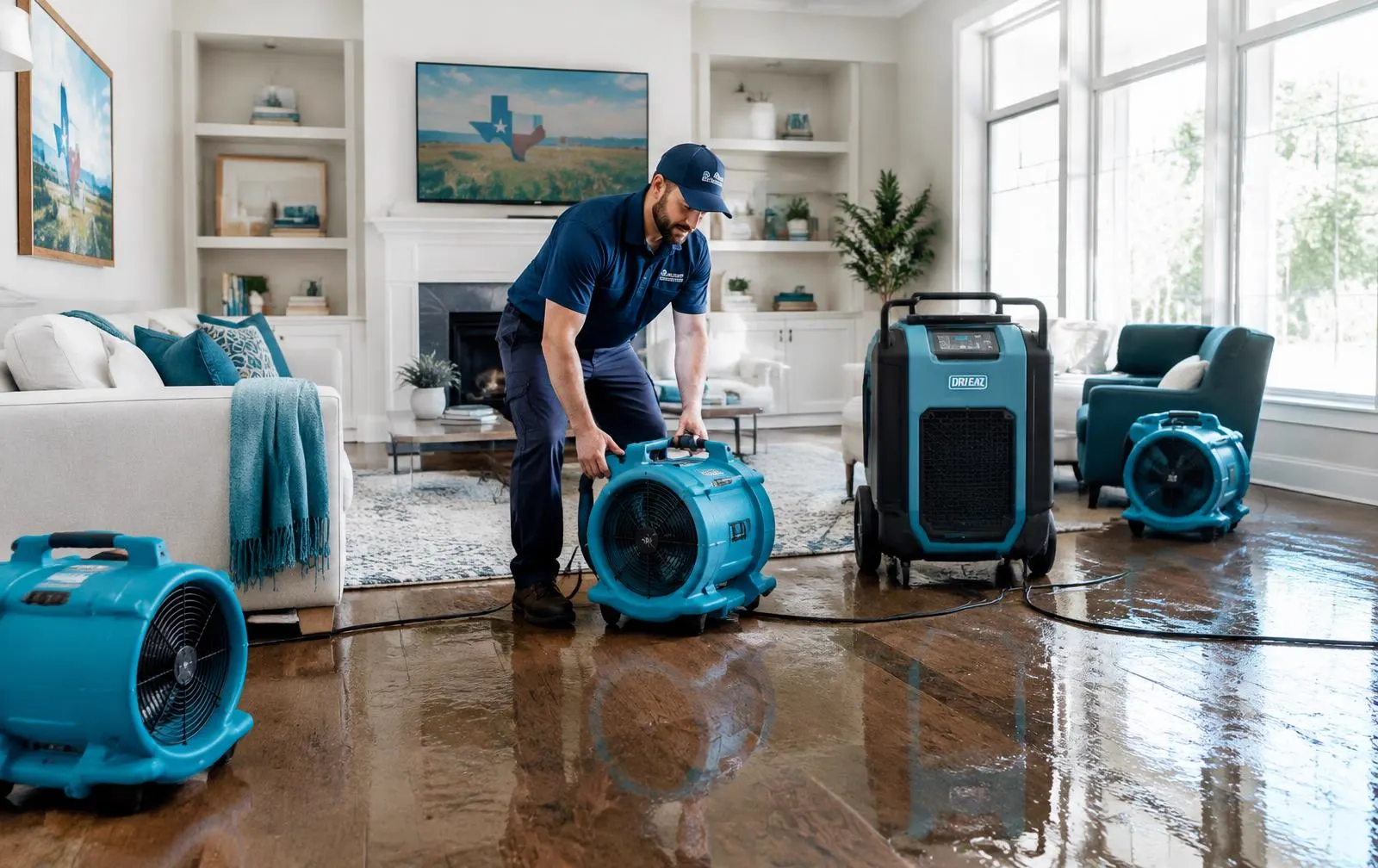
In late March 2025, intense rainfall over Cameron County caused severe flash flooding in Harlingen, with water entering homes, businesses and vehicles across the city. Many residents faced flood water inside their homes for the first time. Events like this — and Hurricane Hanna in 2020 — show how quickly drainage systems and resacas can be overwhelmed when heavy rain sits over the eastern Valley.
Flood water is Category 3 water and requires removal of contaminated porous materials, cleaning and antimicrobial treatment, and thorough structural drying. If your Harlingen home took on storm water, it's important to start cleanup as soon as it's safe — our heat and humidity speed up damage and mold risk.
Everyday water damage in Harlingen homes
Not every water loss comes from a storm. Harlingen's mix of mid-century homes and newer subdivisions means aging water heaters, corroded supply lines, washing machine failures and slab leaks caused by Cameron County’s shifting clay soils are all common. And with air conditioners running most of the year, AC condensate overflows remain one of the top causes of ceiling water damage.
Harlingen is also home to many winter Texans and seasonal residents. A leak that starts while a home is empty can run for days before anyone notices, which makes fast extraction and professional drying even more important.
Insurance after a Harlingen flood
After a flood, many homeowners learn that a standard homeowners policy generally doesn't cover rising water from outside — that's typically covered by a separate flood policy, such as through the NFIP. Only your insurer can decide coverage. We work with all insurance companies, document everything your insurer needs and can bill your insurance directly.
Preventing mold in Harlingen
Fast, professional drying is the best way to prevent mold. If mold is found, we refer you to a TDLR-licensed mold professional, as Texas law requires.