
Quick answer
For a burst pipe or leak: shut off the water, keep away from wet outlets, take photos and call us. We extract water, dry walls, ceilings and cabinets, and repair the damage; a licensed plumber repairs the pipe.
What burst pipe damage looks like
Match what you see at home to the signs below.
See all signs of water damage →A sagging ceiling or water bulge
Call nowA swollen, sagging ceiling can hold a heavy pocket of water. Keep away from underneath it, do not puncture it, and call now.
A water heater leaking in the garage
Call nowWater around a heater can spread across concrete and into adjoining walls. Avoid wet electrical equipment and have the source stopped safely.
An AC overflow stain
Call todayA ceiling stain near the air handler or vent may come from an overflowing condensate drain. Have the AC checked and the wet ceiling inspected.
A split pipe spraying under a sink
Call nowSpraying water inside a sink cabinet points to an active plumbing leak. Shut off the supply if safe and call; a licensed plumber repairs the pipe.
The leaks most common in Valley homes
Pipes do burst in the Rio Grande Valley — just usually not from freezing. Here, most indoor water damage comes from aging supply lines, pressure problems, corroded fittings and appliances that fail without warning. Braided steel supply lines under sinks and toilets wear out over time. Water heater tanks rust through, often in a garage or interior closet where nobody notices until water reaches the hallway. Washing machine hoses split under pressure. Refrigerator ice-maker lines crack behind the fridge and leak slowly into the subfloor and cabinets for weeks.
And then there's the air conditioner. Because AC systems run most of the year in South Texas, condensate drain lines clog with algae and debris, and drain pans in the attic overflow or rust out. Water spills onto the ceiling drywall, and the first sign is often a brown stain, a sagging spot or water dripping from a light fixture or vent.
- Burst or split supply lines under sinks and toilets
- Water heater tank and fitting failures
- AC condensate line clogs and attic drain pan overflows
- Washing machine hose failures
- Dishwasher and ice-maker line leaks
- Leaks inside walls from fittings and pinholes
Ceiling water damage needs special attention
Water above a ceiling is heavy, and saturated drywall can sag and collapse. If you see a bulge in your ceiling, stay out from under it and keep kids and pets away. Do not poke it unless you have been told how to do it safely. Turn off the AC if the leak is coming from the air handler, and shut off power to any light fixture that is dripping.
When we arrive we check the attic, find out how far the water spread across the ceiling and into insulation, and decide what can be dried in place and what needs to come out. Wet blown-in insulation usually has to be removed because it compacts and holds moisture. Ceiling drywall can sometimes be dried, but heavily saturated sections are safer to replace.
What to do right now
First, stop the water. Every home has a main water shutoff, often near the street in a meter box or where the line enters the house. Many fixtures also have their own shutoff valve. For a water heater, close the cold-water supply valve on top of the tank. For an AC leak, turn the system off at the thermostat.
Then make it safe: if water is near outlets, cords or the breaker panel, turn off power to that area if you can do it without standing in water. Take photos and video of everything before you move items — your insurance company will want to see it. Move furniture and valuables out of the wet area if you can, and call us. We'll talk you through anything else while we're on the way.
How we dry and repair leak damage
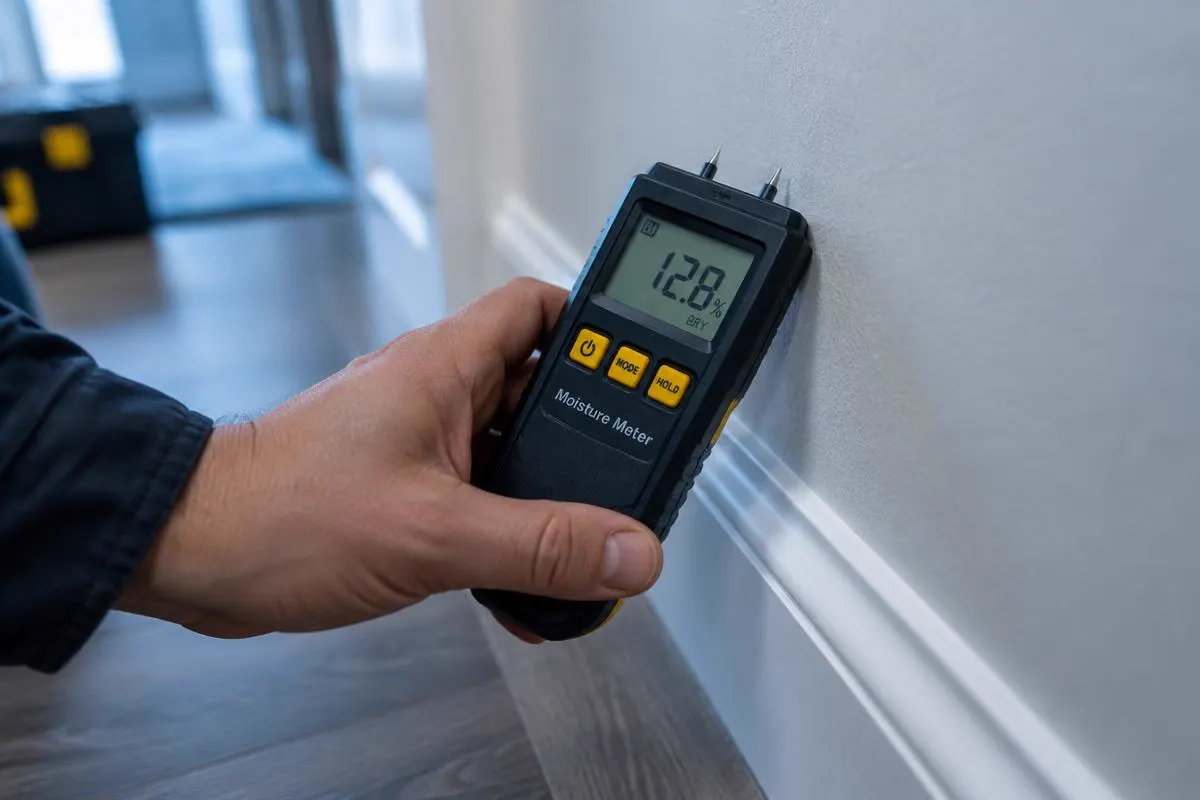
Leak damage is usually clean water at first, which means many materials can be saved if drying starts quickly. We extract any standing water, map moisture through walls, cabinets and floors, and set up air movers and dehumidifiers. For water inside walls, we may remove baseboards and drill small holes to dry the cavity. For cabinets, we open the toe-kicks and dry from underneath. We take daily readings and keep a drying log until everything reaches its normal dry level.
If the leak has been going on for days or weeks — common with ice-maker lines and slow pinhole leaks — the water may have degraded into a higher category and materials may need to be removed. We'll explain what we find in plain language.
Who fixes the pipe?
We focus on the water damage: extraction, drying and restoration. The pipe, fitting or appliance itself should be repaired by a licensed plumber or appliance or HVAC technician. If you don't have one, we can refer you to a licensed plumber. Many homeowners policies treat the repair of the failed part differently from the resulting water damage, so keep receipts for both.
Insurance and documentation
Sudden and accidental leaks are among the most common water damage claims, but coverage depends on your policy and the cause. We work with all insurance companies, document everything your insurer needs — photos, moisture readings and daily drying logs — and can bill your insurance directly in most cases. Your insurer decides coverage.