Quick answer
Flood water is Category 3 (contaminated), so porous materials it touched are usually removed, then the structure is cleaned, sanitized and dried. Standard homeowners policies generally exclude outside flooding; flood policies such as the NFIP usually cover it.
What flood damage looks like
Match what you see at home to the signs below.
See all signs of water damage →A waterline on interior walls
Call nowA horizontal dirty mark shows how high flood water reached. Water may have soaked insulation and drywall behind the visible line.
Mud and silt on floors
Call nowFine mud left after a flood means outside water entered the property. Avoid contact because flood water can carry contaminants.
Water coming under an exterior door
Call nowWater flowing through a threshold can spread quickly across the floor. Stay out of moving water and call once you are safe.
Soaked furniture and lower cabinets
Call nowDamp furniture bases and swollen lower cabinets show that flood water reached porous materials. They need assessment before reuse.
Flooding in the Valley: fast water, flat land
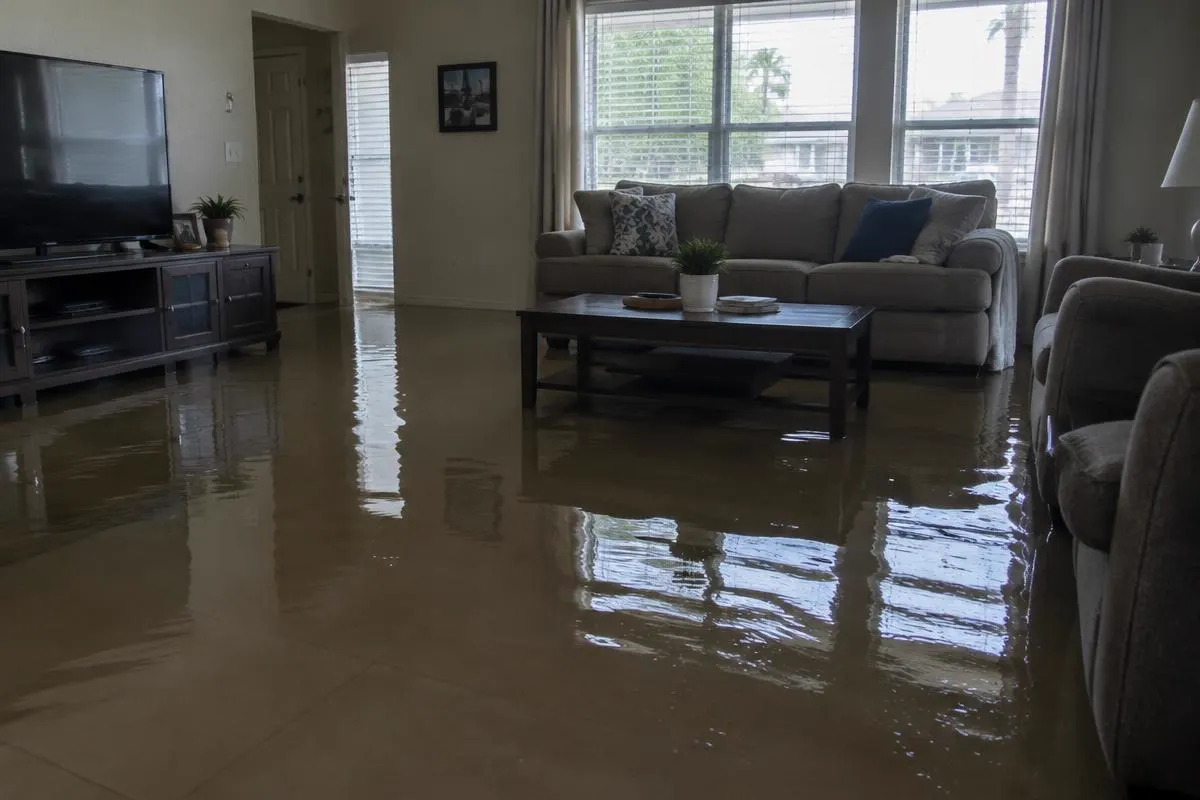
The Rio Grande Valley is flat, close to sea level and crossed by drainage ditches and resacas that can fill quickly during intense rain. When a storm stalls, water has few places to go. In March 2025, heavy rain flooded streets and homes in Harlingen, McAllen and across the region. In July 2020, Hurricane Hanna brought days of rain that flooded neighborhoods throughout Hidalgo and Cameron counties. Every June through November, hurricane season brings the possibility of another tropical system.
Flood water is different from a clean pipe leak. It picks up soil, sewage, fertilizers, fuel and debris on its way into your home. That makes it Category 3 or 'black' water, which requires careful handling, removal of porous materials and thorough cleaning and sanitizing.
How we clean up flood damage
Our crew arrives with protective equipment and the tools to move a lot of water fast. We pump out and extract standing water, then remove mud and debris. Porous materials that soaked up flood water — carpet and pad, the lower section of drywall, insulation and many particleboard cabinets — usually cannot be safely cleaned and are removed and documented.
Next we clean and apply antimicrobial treatment to the remaining structure: studs, slab, and salvageable surfaces. Then structural drying begins, with air movers and dehumidifiers and daily moisture readings until the framing and slab are dry. Only then is it safe to rebuild.
- Pumping and water extraction
- Mud and debris removal
- Removal of contaminated drywall, insulation and flooring
- Cleaning and antimicrobial application
- Structural drying with daily readings
- Rebuild and repairs
Flood insurance vs. homeowners insurance — in plain language
This is one of the most common questions after a storm, and the answer surprises many families. A standard homeowners policy generally does not cover flood damage — meaning water that rises from outside and enters the home at ground level, like flash flooding or storm surge. Flood damage is usually covered by a separate flood insurance policy, most often through the National Flood Insurance Program (NFIP) or a private flood insurer.
Homeowners policies are more likely to apply when water comes from inside the home — a burst pipe, a failed water heater — or in some cases when wind or wind-driven rain damages the roof or windows and lets water in from above. Whether a specific loss is covered depends on your policies and the cause. If you have both a homeowners and a flood policy, you may need to open a claim with each. We can't tell you what's covered — only your insurers can — but we document everything they need, including photos, moisture readings and daily drying logs, and we can bill your insurance directly. Our guide to flood insurance vs. homeowners insurance in the Rio Grande Valley goes deeper.
Staying safe after a flood
Never walk through flood water inside a home if there's any chance it has reached outlets or the electrical panel. If you can safely do so, shut off the main breaker. Keep children and pets out of affected areas. Wear rubber boots and gloves if you must go in, and wash your hands thoroughly. Don't eat food that has touched flood water. Take photos and video of everything before cleanup begins, and keep samples of flooring and materials if your insurer asks.
After a big storm, call early
When a major storm hits the Valley, many homes are affected at the same time. Calling early gets you in the queue and gets you advice right away on what you can safely do while you wait. We answer 24/7, in English and Spanish.
Mold after flooding
In our heat and humidity, mold can appear quickly after a flood. Fast, professional drying is the best way to prevent mold. If mold growth is found, we refer you to a TDLR-licensed mold professional, as Texas law requires.