Quick answer
Sewage is Category 3 water and can carry bacteria and viruses. Stop using water, keep people and pets away and call a professional. Cleanup means containment, removal of porous materials, sanitizing and drying.
What a sewage backup looks like
Match what you see at home to the signs below.
See all signs of water damage →Dark water coming from a drain
Call nowDark water rising from a shower or floor drain may be a sewage backup. Stop using water and keep children and pets away.
Overflow around the toilet base
Call nowWater spreading around a toilet can be contaminated even without visible waste. Avoid contact and have the drain and affected floor checked.
Stained flooring near a drain
Call nowDiscolored flooring after a backup can leave contamination even when the water is gone. Professional cleaning and drying may be needed.
Why sewage is Category 3 water
Water damage professionals classify water into three categories based on contamination. Category 1 is clean water from a supply line. Category 2, or gray water, has some contamination — like a washing machine discharge. Category 3, or black water, is grossly contaminated and can contain bacteria, viruses and parasites. Sewage backups and toilet overflows with waste are always Category 3.
Because of that, sewage cleanup follows a different process than a clean water leak. Porous materials that sewage touches — carpet, pad, drywall, insulation, many cabinets — generally cannot be safely cleaned and must be removed. Hard surfaces must be cleaned and sanitized, not just dried.
Common causes of sewage backups in the Valley
Sewage backups happen when wastewater can't flow out of your home and comes back up through the lowest drains — usually a shower, tub or ground-floor toilet. Common causes include tree roots growing into sewer lines, grease and wipes clogging the line, older clay or cast-iron pipes that have sagged or collapsed, and municipal sewer systems that get overwhelmed during heavy rain. When flash flooding hits the Valley, storm water can enter sewer lines and push sewage back into homes.
- Tree roots in the sewer lateral
- Grease, wipes and debris clogs
- Collapsed or sagging older pipes
- Municipal lines overwhelmed during heavy rain
- Septic system failures in rural areas
What to do right now
Stop using water in the home — every flush and every running faucet adds to the backup. Keep everyone, especially children, older adults, and pets, away from the affected area. Don't try to clean sewage with household products and a mop; you can spread contamination and expose yourself to pathogens. Turn off the HVAC if it pulls air from the affected area. Take photos for your insurance company, and call us.
If the backup is caused by a blockage in your line, you'll also need a licensed plumber to clear it. We can refer you to a licensed plumber.
Our sewage cleanup process
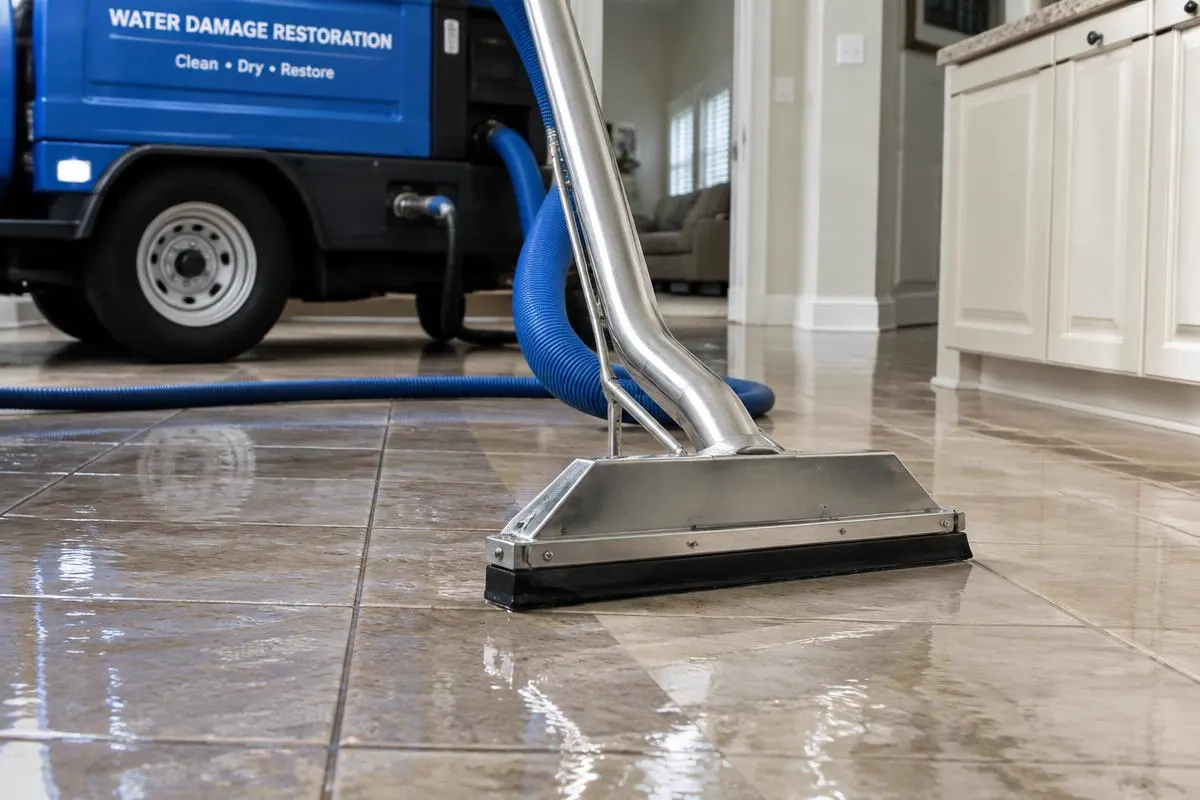
Our technicians wear protective equipment and set up containment to keep contamination from spreading to clean areas of the house. We extract the sewage and water, then remove and bag contaminated porous materials. Every exposed surface is cleaned and treated with antimicrobial products. Then we dry the structure with air movers and dehumidifiers, taking daily moisture readings and keeping a drying log until it's dry. Finally, we rebuild what was removed.
We document everything — what was affected, what was removed and why — with photos and notes. That documentation is what your insurance company will ask for.
Is it safe to stay home?
That depends on how large the affected area is and who lives in the home. If sewage is limited to one bathroom and can be contained, many families can stay. If it affects living areas, the only bathroom, or if anyone in the home is pregnant, elderly, very young or has a weakened immune system, it's usually best to stay elsewhere until cleaning and sanitizing are complete. We'll give you an honest recommendation.
Sewage backup and insurance
Sewer backup coverage is often an optional endorsement on Texas homeowners policies, so it's worth checking whether you have it. Only your insurer can decide coverage. We work with all insurance companies, document everything your insurer needs — photos, moisture readings and daily drying logs — and can bill your insurance directly when coverage applies.