Quick answer
Structural drying removes hidden moisture from drywall, framing, subfloors and slabs using air movers and dehumidifiers. Most homes dry in 3–5 days, confirmed with daily moisture readings against dry reference points.
What trapped moisture looks like
Match what you see at home to the signs below.
See all signs of water damage →A darker band rising up drywall
Call todayA wick line forms as drywall draws water upward. Moisture can extend above the visible line and needs to be measured.
Trim still damp days later
Call todayTrim that stays damp after cleanup suggests hidden moisture is not drying. Check behind baseboards and inside walls before repainting.
Floor cupping after the leak is fixed
Call todayCurling floor edges after a repaired leak can mean moisture remains below. Stopping the leak does not automatically dry the floor.
High moisture in a dry-looking wall
Get it inspected soonA moisture meter can find water that is not visible on the surface. A professional compares readings with a dry reference area.
What structural drying is
Structural drying is the controlled process of removing moisture from the building itself — drywall, wood framing, subfloors, concrete slabs, cabinets and insulation. Instead of pointing a box fan at a wet wall and hoping, we create the right conditions for water to leave materials quickly: lots of airflow across wet surfaces, dry air from commercial dehumidifiers, and controlled temperature.
Done right, structural drying saves materials that would otherwise be torn out. Drywall that has been wet for a short time with clean water can often be dried in place. Hardwood can sometimes be saved with specialized floor-drying systems. Cabinets can be dried by opening toe-kicks and directing air into the cavities. Every material we save is less demolition, less waste and a faster return to normal.
Moisture mapping: finding every wet spot
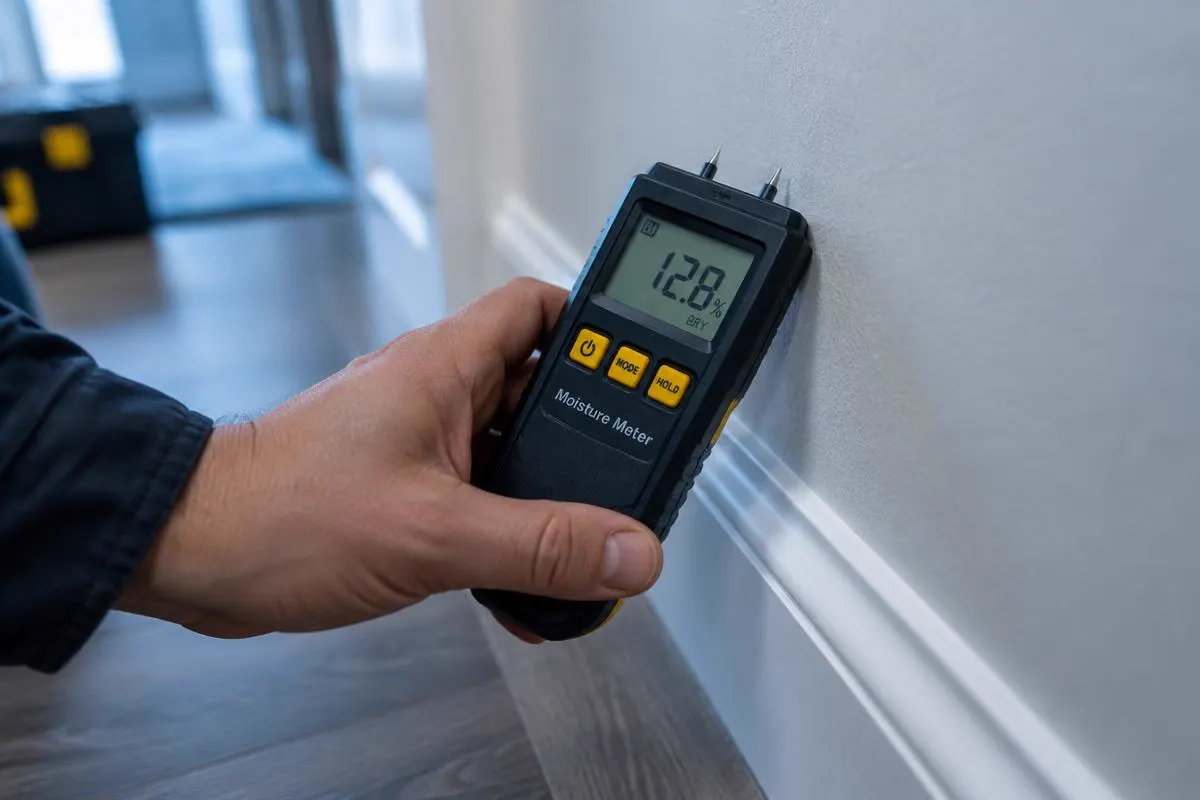
Before we place a single fan, we map the moisture. Using pin and pinless moisture meters along with thermal imaging cameras, we trace how far the water has traveled — often well beyond the area that looks wet. Water can travel under walls into neighboring rooms, wick several feet up drywall, and spread across a slab beneath tile and vinyl plank.
We record readings on a moisture map for each affected room and compare them to dry reference readings from unaffected areas of your home. Those reference readings become our drying goal. A material is not considered dry until it matches its normal, unaffected condition.
Air movers and dehumidifiers — sized to your space
Drying equipment is not one-size-fits-all. We calculate how many air movers and how much dehumidification capacity a space needs based on the square footage, the materials involved and how much water was absorbed. Air movers are positioned to push high-velocity air across wet walls and floors. Low-grain refrigerant or desiccant dehumidifiers pull that evaporated moisture out of the air so it doesn't just settle back into your home.
In the Rio Grande Valley, this matters more than in drier parts of Texas. Our outdoor air is humid most of the year, so opening windows rarely helps and can actually slow drying. We typically keep the drying area closed and let the dehumidifiers do the work, while your AC helps manage temperature.
Daily moisture readings and drying logs
A technician returns every day of the drying process to take readings at the same marked points, check humidity and temperature, and adjust or move equipment as areas dry. Every reading goes into a drying log. Over a few days you can see the numbers fall toward the dry goal.
These logs matter for two reasons. First, they tell us when the job is actually done, so we don't pull equipment too early and leave hidden moisture behind. Second, they are exactly the kind of documentation insurance companies look for. We document everything your insurer needs — photos, moisture readings and daily drying logs — so you have a clear record of what was wet, what was done and when it was dry.
- Daily moisture readings at marked points
- Temperature and relative humidity tracking
- Equipment adjustments as materials dry
- Photo documentation of each stage
- Final readings confirming the dry standard
How long does structural drying take?
Most residential drying jobs take three to five days. Dense materials such as hardwood, plaster or concrete, or water that sat for a long time before drying started, can take longer. Our humidity can add time, which is another reason to start professional drying as quickly as possible. We will give you an estimate after the first day's readings and update you daily.
Drying is your best defense against mold
Fast, professional drying is the best way to prevent mold. Mold needs moisture, and by bringing materials back to normal levels within days, we remove that moisture. If mold is found during the inspection or drying process, we refer you to a TDLR-licensed mold professional, as Texas requires.