Water damage risks in McAllen
McAllen's growth has been fast, and that means a mix of homes built decades ago with aging copper and galvanized lines alongside newer construction with PEX plumbing and tight building envelopes. Both can suffer water damage — older homes from corroded fittings and slab leaks, newer homes from appliance connections and AC condensate overflows that go unnoticed in attics.
Flooding is a real concern here too. The March 2025 storms brought intense rain that flooded streets and homes in McAllen, and Hurricane Hanna in 2020 left many Hidalgo County families dealing with standing water. When heavy rain falls faster than drainage can carry it, low-lying streets and homes can take on water in under an hour. Hurricane season, from June through November, keeps that risk on the calendar every year.
Slab leaks and AC leaks in McAllen homes
Like the rest of the Valley, McAllen sits on expansive clay soil that swells and shrinks with rain and drought. That movement stresses slab foundations and the water lines under them, which is why slab leaks are one of the most common causes of water damage in McAllen homes. Warm spots on tile, an unexplained jump in the water bill, or the sound of running water are all signs worth a free inspection.
McAllen air conditioners run most of the year, and condensate drain lines clog with algae in our heat. An overflowing drain pan in the attic can soak ceiling drywall and insulation before anyone notices a stain. Two-story homes and commercial buildings with attic or rooftop units are especially prone to it.
Serving McAllen homes and businesses 24/7
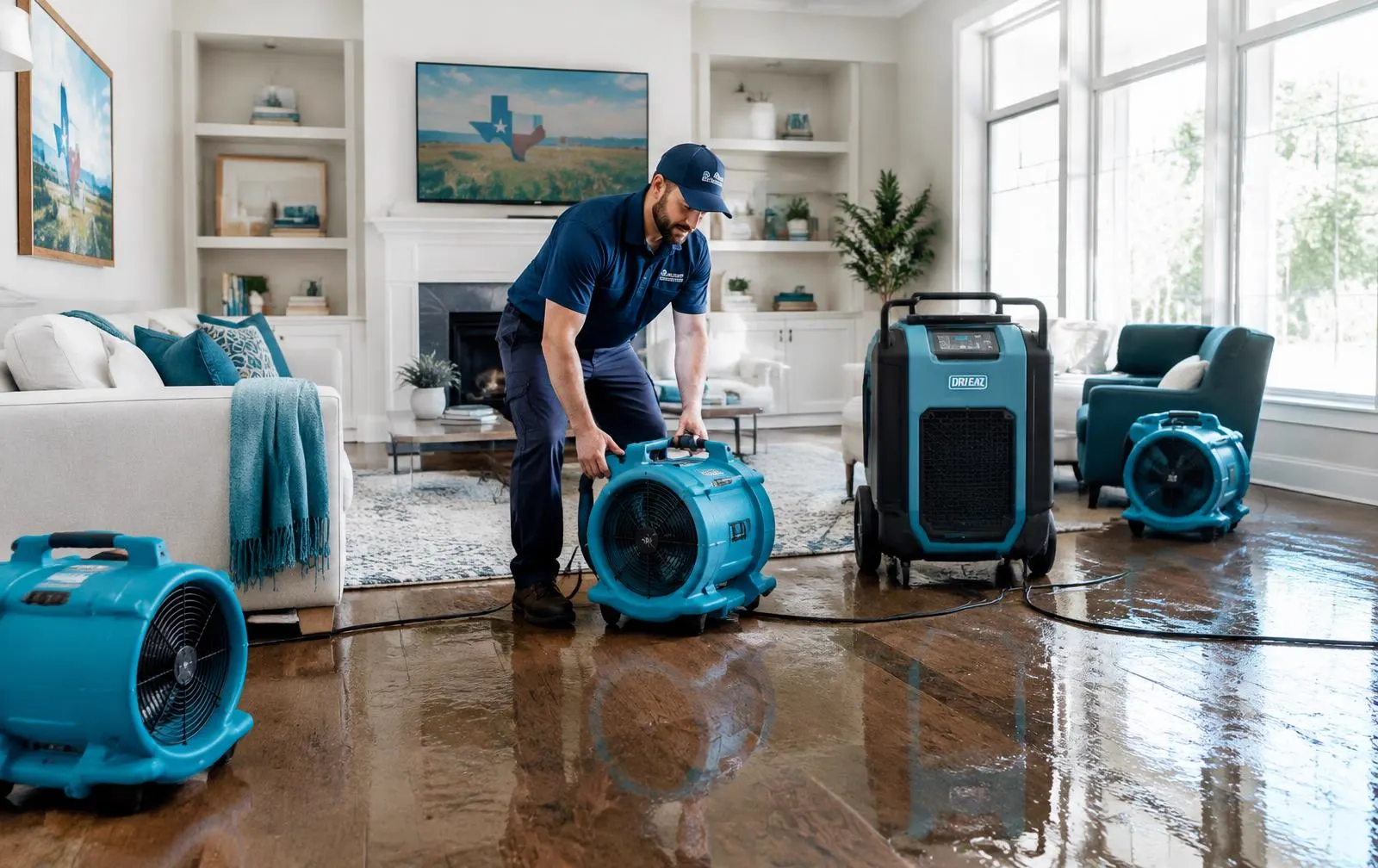
Whether it's a family home, a medical office, a restaurant or a rental property, our bilingual team will walk you through what to do right now and get equipment on site fast. We work with all insurance companies and document everything your insurer needs — photos, moisture readings and daily drying logs. Your insurer decides coverage.
Preventing mold in McAllen
Fast, professional drying is the best way to prevent mold. If mold is found, we refer you to a TDLR-licensed mold professional, as Texas law requires.