Quick answer
With professional equipment, most houses dry in 3–5 days. Dense materials, long-standing water and Valley humidity can add time. A house is dry when daily moisture readings match unaffected areas.
Published · General information, not legal or insurance advice.
Typical drying time: three to five days
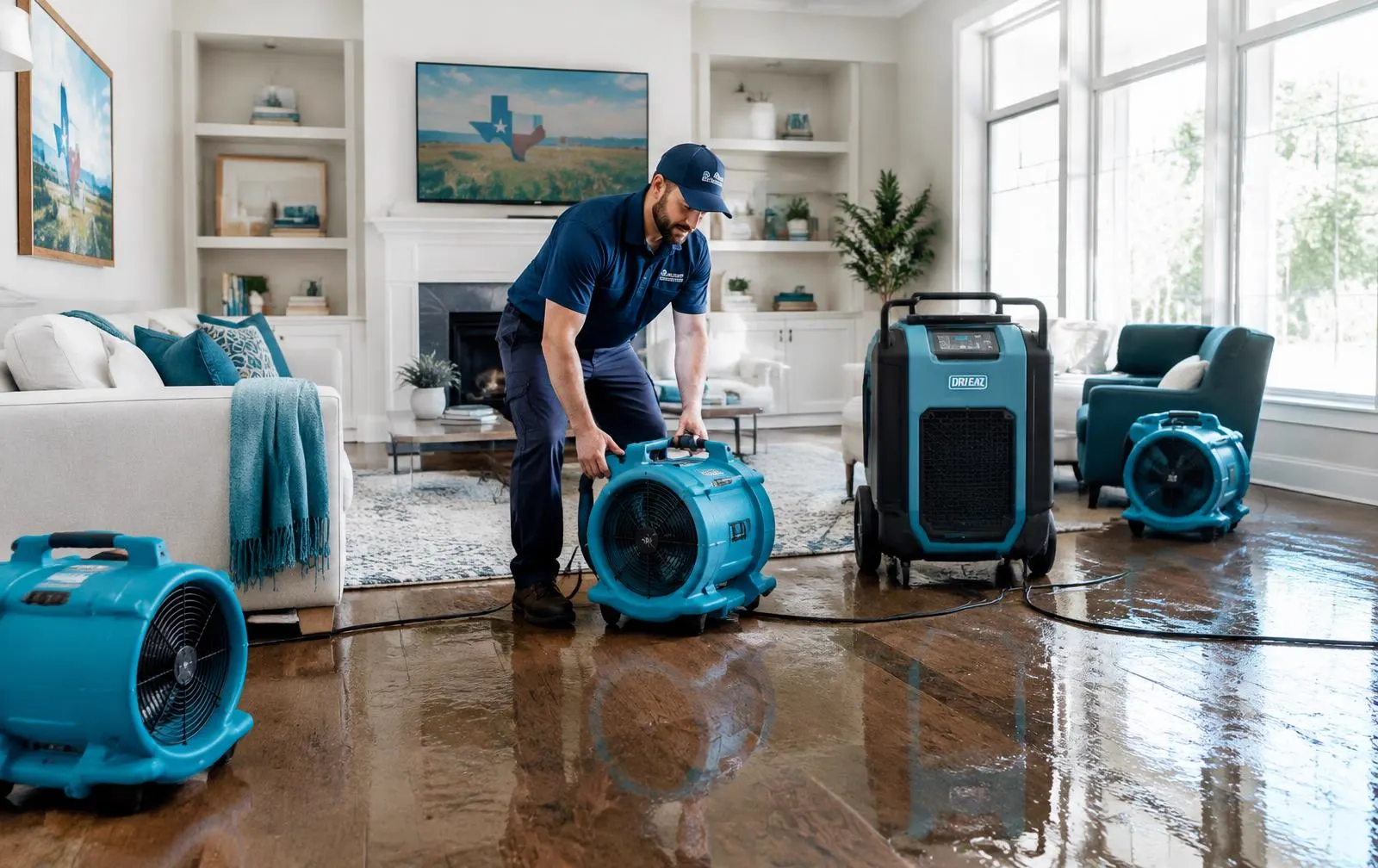
With professional equipment, most homes affected by a clean-water leak dry in about three to five days. That's the time it takes for commercial air movers and dehumidifiers to pull water out of drywall, framing, subfloors and cabinets and bring them back to normal moisture levels. Some jobs finish sooner; others take a week or more.
Without professional equipment — just box fans and open windows — drying can take weeks, and materials may never fully dry. Hidden moisture inside walls and under floors is what leads to swelling, odors and mold.
What affects drying time
- How much water and how long it sat before drying started
- Materials — hardwood, plaster and concrete hold more water and dry slower than drywall
- Water category — contaminated water often means removing materials first
- Humidity and temperature — the Valley's humid air slows evaporation
- Equipment — properly sized air movers and dehumidifiers make a big difference
Why humidity matters in the Rio Grande Valley
Air can only hold so much moisture. In the Valley, outdoor humidity is high most of the year, so wet materials don't dry well on their own and opening windows often adds moisture rather than removing it. That's why we typically close up the drying area and rely on dehumidifiers to pull water out of the air while air movers push air across wet surfaces.
How we know it's actually dry
Dry to the touch isn't dry. We take moisture readings in unaffected areas of your home to set a dry standard, then take readings at the same marked points in wet areas every day. When wet materials match the dry standard, the drying is complete. Every reading goes into a daily drying log — documentation your insurance company will want to see.
Can I speed it up?
Yes: call quickly, leave the equipment running 24 hours a day, keep doors and windows closed unless we say otherwise, keep your AC running at a comfortable temperature, and don't move equipment. Fast, professional drying is also the best way to prevent mold.
Fast, professional drying is the best way to prevent mold. If mold is found, we refer you to a TDLR-licensed mold professional, as Texas law requires.